
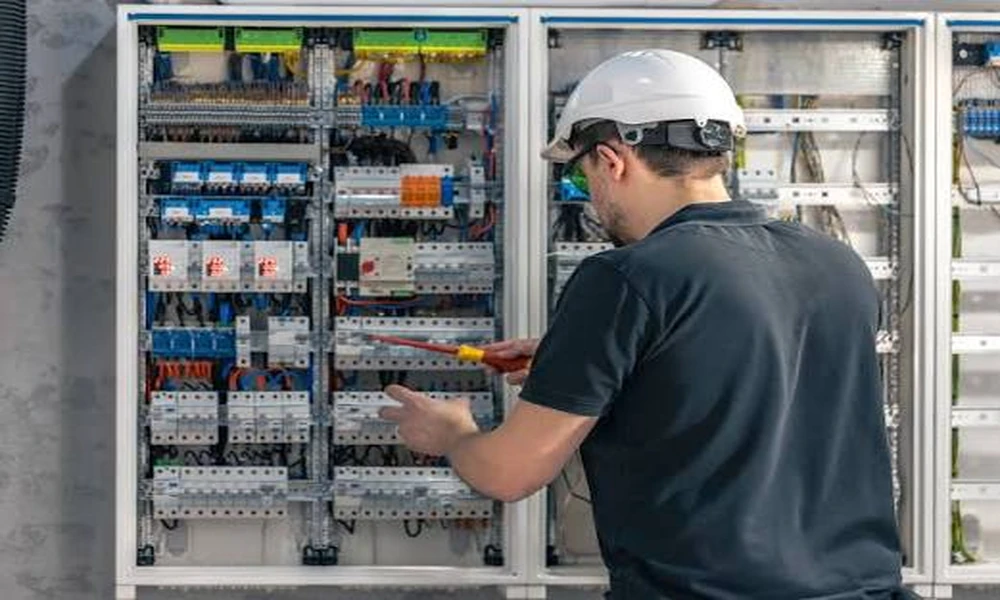
Business owners have to treat electrical safety as something very important. Selecting the wrong safety components might lead to fire, damage to the equipment, or even shut down your business completely. A structure will be able to remain secure only through the matching of certain aspects such as the voltage, current, and types of fault with the best standards available, including UL 489 or IEC 60947. Irrespective of whether it is an office, busy shop, or a factory, purchasing the right safety components will help keep your vision intact. Proper planning will ensure that any problems that occur in one location are confined to that point only and do not affect anything else.
Areas that have work and shop power needs, like power sockets and lights, need strong electric panels to fix problems fast. A good commercial miniature circuit breaker will help your wiring that has lower current stay safe if you get a short circuit.
Which Breaker Category Fits Your Load?
To find the right electrical safety, begin by seeing where the device is in your building’s setup for power.
| Breaker Type | Typical Ampere Rating | Primary Placement | Essential Function |
|---|---|---|---|
| Miniature Breaker (MCB) | 0.5A – 125A | Final Branch Lines | Protects lighting, wall plugs, and office IT gear |
| Molded Case (MCCB) | 16A – 2,500A | Distribution Feeders | Guards HVAC compressors, motors, and sub-panels |
| Air Circuit Breaker (ACB) | 630A – 6,300A | Main Incoming Switchgear | Shields main facility feeds and generator buses |
Essential Specs Engineers Evaluate First
To stop early issues or troubles that could make the panel fail, check these four things before you get new units:
- Continuous Current Rating ($I_n$): This represents the maximum current that the circuit breaker can sustain throughout the day. According to the National Electrical Code (NEC), it is necessary that you install a breaker rated for 125% of the normal load.
- Breaking Capacity ($I_{cu}$): This value, measured in kiloamperes (kA), defines the maximum short circuit current that the breaker can interrupt without an arc flash or internal damage.
- Trip Curve Profiles:
○ Type B: Shuts off power at three to five times the rated current. This one is made for heating loads that use wires to make heat.
○ Type C: Shuts off power at five to ten times the rated current. You will find this type in office air, servers, and strong light setups.
○ Type D: Shuts off power at ten to twenty times the rated current. It is used with big machines, power tools, and strong pumps.
3 Practical Steps for Facility Owners
- Sub-Panel Branch Circuits Distribution: Have a layout ready for how you would like your sub-panels, branch circuits, and motor feeders to be distributed before setting up any new equipment.
- Consider the Environment: NEMA 3R/4X or IP65 sealed enclosures protect against water, heat, and particulate matter in the atmosphere, preventing damage to internal conductors that may be exposed to heat.
- Trip Coordination: It is advisable that the upper-level breakers have a short-time delay feature. This will enable the lower-level breakers to clear the faults in their proximity without having to shut off the entire floor.
Summary
When it comes to power safety at work, there is always the need for one to consider choosing the right protective equipment that can suit the task at hand. The right safety equipment, including a miniature circuit breaker, makes it possible for you to experience reduced downtime, reduced costs, and ensures the safety of those involved. In the case of sub-panels that serve lighting and other office equipment, the correct circuit breaker will make your place safer and help everything work well for everyone.