
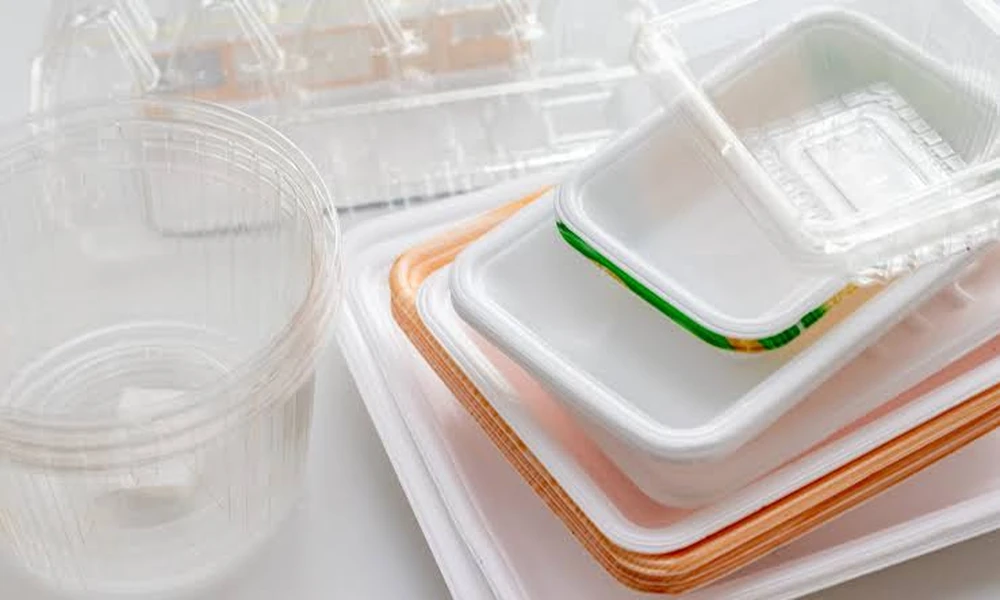
Walk through a commercial kitchen at closing time and you will see six or seven distinct packaging formats in use, each chosen for a reason nobody articulated. The soup goes in one thing, the rice in another, the salad in something with a clear lid. Understanding the common types of plastic packaging and what each is actually built for turns those decisions from habit into something you can cost and defend.
The Resins Behind the Formats
Most food packaging comes down to a handful of materials. PP, marked with a five, tolerates heat well, resists oils and is microwave-safe, which makes it the workhorse for hot food and reheatable meals. PET, marked one, is clear and rigid with good oxygen barrier properties, ideal for cold items where visibility sells. HDPE, marked two, is tough and opaque and suits bottles and heavy-duty containers. PS, marked six, is cheap and rigid and appears in disposable items. Recognising the code on a base tells you most of what a container can do.
Rigid Containers With Lids
The standard round or rectangular tub with a snap-on lid handles almost everything: soups, curries, rice, noodles, sauces. Round tubs seal more reliably because a circular rim distributes clamping force evenly; rectangular ones pack more efficiently into bags and boxes. Look at the rim design, since a lid that seats with an audible click and a full-perimeter groove is what stands between a delivery rider and a complaint.
Compartment Trays and Bento Formats
Where components must not touch, a divided tray does the job a single tub cannot: keeping fried items away from sauce, salad away from dressing, and rice from absorbing gravy in transit. These suit set meals, catering and meal-prep services. The trade is bulk, since dividers use vertical space inefficiently, and cost per unit. Check whether the lid seals across each compartment or only around the outside, because the latter allows contents to migrate when a bag tips.
Clear Lids and the Visibility Question
For salads, cakes, cut fruit and anything presented as fresh, a clear lid over an opaque or clear base sells the contents. PET performs best here because it stays clear and does not haze. The caveat is heat: a clear PET lid on hot food fogs immediately and can deform, so hot items either need a PP lid or need to be cool before covering. Many operations run two lid types for exactly this reason.
Bags, Films and Wraps
Not everything needs a rigid container. Bags suit bread, snacks and dry goods; vacuum and gusseted formats extend shelf life for prepared items; cling and stretch films cover trays and secure pallets. Films are specified by thickness and by whether they are permeable, since some fresh produce needs to breathe and suffocates in a fully sealed wrap. Barrier films block oxygen and moisture and cost more, and they are what make a chilled ready meal last a fortnight rather than three days.
Bottles and Closures
Drinks, sauces, dressings and syrups need a neck finish matched to a closure, and getting that pairing wrong renders both unusable. Consider whether the closure needs tamper evidence, which for retail sale it usually does, and whether a dispensing or flip-top cap suits how the product is consumed. For anything hot-filled, the resin has to tolerate the fill temperature without deforming, which rules out several otherwise attractive options.
Tamper Evidence and Delivery
The growth of delivery has made tamper-evident closure a practical requirement rather than a nicety. Options include lids with frangible tabs that break on first opening, induction seals bonded to the rim by heat, and external tamper labels applied across the join. Each has a cost and a line-speed implication. Suppliers of ready-to-eat food packaging can usually advise which format suits a given container without requiring new equipment.
Recyclability and What Customers Notice
Sustainability questions now reach packaging suppliers routinely, and the honest position is more nuanced than a logo. Single-resin containers are far easier to recycle than composites, so a PP tub with a PP lid is a better proposition than one combining materials that must be separated. Contamination is the practical obstacle, food residue sends a container to general waste regardless of what it is made from, which is why rinsing matters more than the code on the base. Reducing material by choosing the lightest container that still performs is usually a larger real-world gain than switching resin, and it costs less rather than more.
Matching Packaging to the Journey
Specify against the worst part of the trip, not the average. A container that performs perfectly on a counter may leak when carried at an angle on a motorcycle for twenty minutes in the rain. Consider stacking during transport, since a lid that supports another container is a different specification from one that does not, and top-load strength matters when six orders share a bag. Test with your actual product and your actual delivery method before committing to a large order.
Cost, Volume and Practicality
Unit price is the visible number and rarely the whole cost. Consider storage space for stock, whether nesting reduces that, how quickly staff can assemble and close each format during a rush, and how often a failure produces a refund. A container costing marginally more that never leaks is cheaper than the alternative. Chosen against the contents, the temperature and the journey, plastic packaging stops being a recurring irritation and becomes something nobody has to think about.