
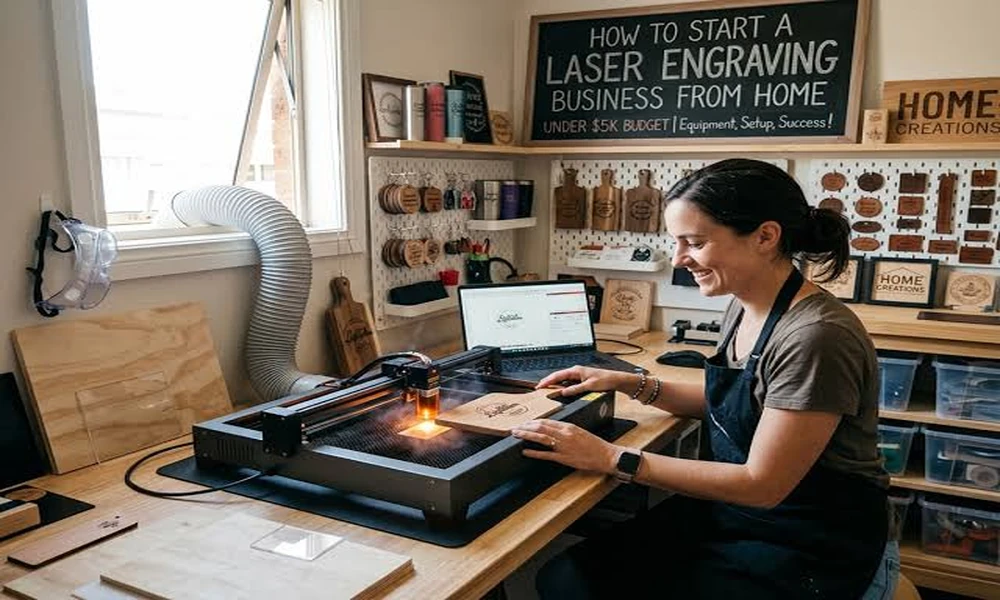
Starting a laser engraving business from home can be an attractive opportunity for Australians who enjoy making things, have an eye for design, or want to build an additional source of income. With a suitable laser engraving machine, you can turn ordinary materials into personalised gifts, decorative products, business signs, and custom accessories that customers are willing to pay for.
One of the biggest advantages of this type of business is its flexibility. You do not necessarily need a commercial workshop or a large production team to get started. A suitable desktop laser engraver can handle many small-scale projects from a home workspace, allowing you to test products and build a customer base before expanding.
However, starting a home-based engraving business still requires planning. You need to choose the right machine, understand material compatibility, organise your workspace, calculate production costs, and find customers. Here are six important things to consider before getting started.
1. Decide What Products You Want to Sell
Before purchasing a laser engraver, think about the types of products you want to make. Laser engraving is a broad industry, and trying to sell everything at once can make it difficult to develop a clear brand. Instead, start with a few product categories that match your interests and the equipment you plan to buy. Some popular options include:
- Personalised gifts: Engraved wooden chopping boards, keyrings, photo frames, drinkware, and custom keepsakes are useful products for birthdays, weddings, anniversaries, and other occasions.
- Home decorations: You could create wooden wall art, decorative signs, ornaments, house numbers, and personalised accessories for Australian homes.
- Business merchandise: Small businesses often need branded signs, promotional products, menu displays, nameplates, and customised accessories.
- Wedding and event products: Table numbers, seating signs, cake toppers, and personalised decorations offer opportunities to work with event planners and customers organising special occasions.
- Custom accessories: Depending on the material, you could produce jewellery, bag tags, pet identification accessories, and other small personalised products.
When choosing a niche, consider whether customers are likely to order repeatedly, whether the products are easy to package and ship, and how much competition exists in your target market.
2. Choose a Laser Engraver That Matches Your Business Goals
Your laser engraver is the most important piece of equipment in your business, so it is worth spending time comparing different options. The first thing to understand is that laser technologies are designed for different materials.
- CO2 laser engravers are particularly versatile for home-based craft businesses. They can process compatible wood, acrylic, leather, paper, cardboard, and certain fabrics. This makes them suitable for a wide range of personalised products and decorative items.
- Diode lasers can be useful for smaller projects involving wood, leather, and other compatible materials. Fibre lasers, meanwhile, are primarily designed for metal engraving.
For a business that wants to offer a variety of gifts, signs, and decorative products, a desktop CO2 machine is often a practical starting point. You should also consider the machine’s power rating and working area. A smaller engraving area may be sufficient for keyrings and ornaments, but larger signs and multiple products require more room.
3. Prepare a Suitable Home Workspace
You do not need a large factory to operate a small laser engraving business, but you do need an appropriate workspace. Start by identifying an area where you can safely install your machine and store your materials. A spare room, dedicated workshop, or suitable garage may work, depending on ventilation, electrical access, noise, and local requirements. Your workspace should include:
-
Enough room for the laser engraver and its accessories
-
A suitable exhaust and fume extraction arrangement
-
A stable electrical supply
-
Storage for wood, acrylic, leather, and other materials
-
A computer for preparing designs and controlling the machine
-
Space for cleaning, packaging, and inspecting finished products
Ventilation is particularly important. Laser engraving and cutting can release smoke, fumes, and airborne particles. Use suitable extraction equipment and follow the machine manufacturer’s safety instructions. Never leave a laser machine operating unattended, and only process materials that are confirmed to be safe for laser use. PVC and other chlorine-containing materials must never be laser processed. You should also check whether your intended home business activities require local council approval, particularly if your operation may affect neighbours through noise, deliveries, traffic, or other activities.
4. Calculate Your Startup and Running Costs
One mistake new entrepreneurs make is focusing only on the purchase price of the laser engraver. A realistic startup budget should account for all the equipment and expenses needed to complete customer orders. Your initial costs may include:
-
Laser engraving machine
-
Ventilation and fume extraction equipment
-
Computer and design software
-
Starter materials and sample products
-
Packaging supplies
-
Website or online marketplace fees
-
Business registration and insurance
-
Marketing and product photography
You should also account for ongoing costs such as electricity, replacement parts, laser tube maintenance, materials, shipping, and your own labour. When pricing your products, consider the full cost of production rather than simply adding a small margin to the material price.
For example, a personalised wooden sign may require material, design preparation, engraving time, finishing, packaging, and delivery. All these activities contribute to the final cost. Start with a small product range and track the time and materials required for each item. This will help you identify which products offer the best balance between customer demand and profitability.
5. Find Customers and Promote Your Business
Once you have your machine and initial products, the next challenge is attracting customers. Fortunately, a home-based engraving business can use several online and local marketing channels.
- Etsy and online marketplaces: These platforms can help you reach customers searching for personalised gifts, decorations, and handmade products. Strong product photography and detailed descriptions are important.
- Social media: Instagram, Facebook, TikTok, and Pinterest can help you showcase the engraving process, finished products, and custom orders. Short videos showing a design being engraved can be particularly useful for attracting attention.
- Local partnerships: Contact wedding planners, gift shops, florists, event organisers, and small businesses that may need personalised products or branded merchandise.
- Your own website: A dedicated online store gives you more control over your branding, product catalogue, and customer experience.
It is also worth developing a few sample products before launching. Customers are more likely to place an order when they can see examples of the quality and personalisation options you offer.
6. Start Small and Expand as Demand Grows
You do not need to invest in the most powerful laser engraver available or offer dozens of products immediately. A better approach is to start with a manageable selection, test customer demand, and expand once you understand your production workflow.
For example, you could begin with personalised wooden gifts and acrylic signs. Once you have consistent orders, you might introduce wedding decorations, business signage, or cylindrical products using a compatible rotary attachment. This gradual approach helps you avoid unnecessary equipment expenses and gives you time to develop your design and production skills.
You should also look into the administrative requirements of running a business in Australia. Depending on your circumstances, these may include obtaining an Australian Business Number (ABN), understanding GST obligations, keeping appropriate financial records, arranging insurance, and checking home-business requirements with your local council.
Which Laser Engraver Should You Consider?
If you want to start a home-based engraving business, the OMTech Polar Lite Laser Engraver is worth considering. Its 55W CO2 laser can process a variety of compatible materials, including wood, acrylic, leather, and certain fabrics. This gives you the flexibility to explore several product categories without purchasing separate machines for each material.
The Polar Lite features a 500 × 300 mm working area, which provides room for larger decorative pieces or multiple smaller products in one setup. It also supports a maximum processing speed of 500 mm/s. For home-based entrepreneurs, its one-click autofocus and integrated 5MP camera are particularly useful. Autofocus simplifies material preparation, while the camera helps position designs accurately on the workpiece. This can reduce mistakes when personalising pre-cut blanks or producing multiple items.
The machine also includes air assist, integrated cooling, and an exhaust fan to support its operation. Its compatibility with LightBurn and RDWorks provides flexibility when preparing and controlling your designs. Another advantage is its compatibility with a rotary attachment, which can expand your product range to include suitable cylindrical objects such as drinkware and bottles. For someone looking to start small but retain the flexibility to develop a broader product range, the Polar Lite offers a useful combination of power, working area, and practical features.
Final Thoughts
Yes, you can start a laser engraving business from home in Australia. You do not necessarily need a commercial workshop or a large production facility to begin making personalised products and accepting customer orders. What you need is a clear product focus, a suitable machine, a safe workspace, and a realistic understanding of your costs.
Start with a few products you can manufacture consistently, test demand through online and local channels, and gradually expand your services as your skills and customer base develop. A versatile desktop CO2 machine like the OMTech Polar Lite 55W can help you explore different materials and applications without committing to a large industrial setup. With careful planning and consistent product quality, a home-based engraving business can develop into a worthwhile creative venture.