
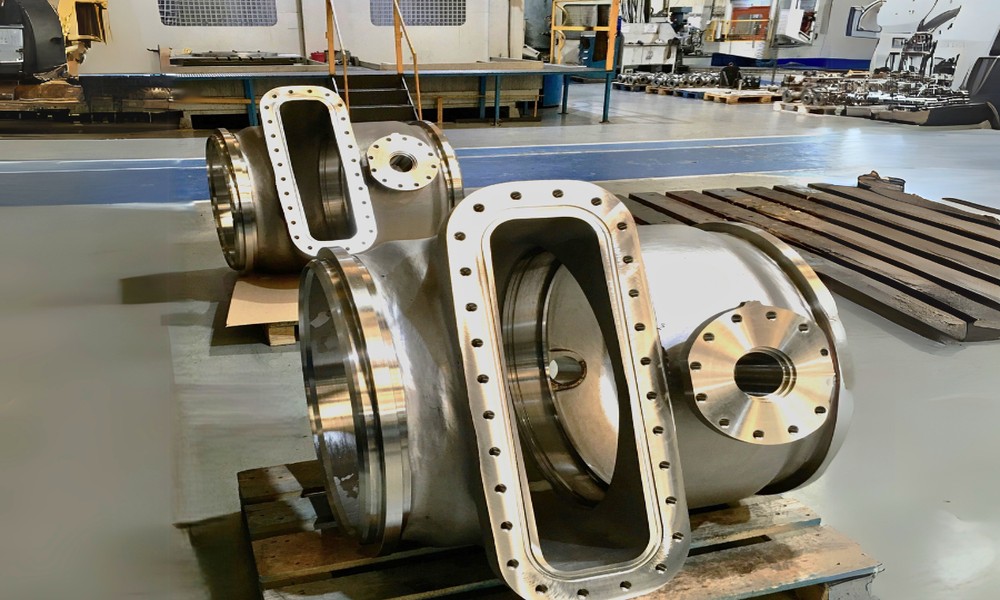
AMT precision parts serve as the backbone of industrial operations that demand exacting tolerances and repeatable quality across every production run. In sectors where a single micron of deviation can compromise a finished product, the ability to manufacture components with consistent dimensional accuracy separates capable suppliers from the rest. AMT, a Singapore-based precision engineering company, has built its reputation on delivering tooling and machined parts that meet the tightest specifications required by aerospace, automotive and medical device customers.
The Role of Precision Tooling in Modern Manufacturing
Precision tooling forms the starting point for any high-accuracy production process. Moulds, dies and jigs must hold their shape across thousands of cycles without measurable wear. When tooling degrades, every downstream component inherits that error, multiplying waste and rework costs. AMT invests in wire EDM, CNC milling and surface grinding equipment that can produce tool inserts and cavity blocks with tolerances tighter than five microns. This capability allows clients to maintain consistent part geometry from the first shot to the last in a production run.
Material Selection for Tooling
The company’s tooling division works with hardened steels, carbide and speciality alloys selected for their thermal stability and abrasion resistance. Material selection at this stage has a direct effect on tool life, which in turn determines how many parts a manufacturer can produce before retooling. By matching alloy properties to specific moulding or stamping applications, AMT helps clients reduce unplanned downtime on the factory floor.
Tight Tolerances and Their Industrial Significance
A tolerance of plus or minus five microns sounds abstract until you consider its practical consequences:
- In semiconductor packaging, connector pins that sit outside this range will not seat properly, causing intermittent electrical contact.
- In fuel injection systems, a nozzle bore that deviates by ten microns can alter spray patterns enough to push emissions beyond regulatory limits.
Precision machined components eliminate these risks by keeping critical dimensions within a narrow band that the end application requires.
Measurement and Traceability
AMT’s measurement laboratory uses coordinate measuring machines and optical comparators to verify each batch against its engineering drawing. Inspection data accompanies every shipment, giving clients traceable evidence that parts conform to specification. This documentation becomes particularly valuable during audits, where customers or regulators may request proof that a supplier’s output meets declared tolerances.
Dr. Beh Swan Gin, former chairman of the Singapore Economic Development Board, once observed that “Singapore’s manufacturing sector thrives because companies here commit to quality systems that international buyers trust.” AMT’s inspection protocols reflect that commitment, with every critical dimension recorded and archived for future reference.
Materials and Machining Processes
The choice of raw material dictates machining strategy. Stainless steel grades used in medical instruments require different cutting speeds and coolant pressures than the aluminium alloys common in electronics enclosures. AMT’s engineering team reviews each project’s material specification early in the quoting process, identifying potential machining challenges before they reach the shop floor. This front-end analysis reduces lead times by preventing trial-and-error setups on the machine.
Process Capabilities
CNC turning, milling, grinding and electrical discharge machining each address different geometry requirements:
- Cylindrical features with tight concentricity demands go to CNC lathes.
- Complex pocket geometries and contoured surfaces move to five-axis milling centres.
- Fine surface finishes below Ra 0.2 often call for a grinding operation as a final step.
AMT’s ability to route work across multiple processes under one roof shortens the supply chain and gives clients a single point of accountability for quality.
Wire EDM for Hard Materials
Wire EDM handles features that conventional cutting tools cannot reach, such as narrow slots in hardened tool steel or intricate profiles in tungsten carbide. The process uses a thin electrically charged wire to erode material without mechanical force, preserving the workpiece’s metallurgical integrity. This method proves especially useful for precision tooling inserts that must maintain sharp edges over long production runs.
Quality Management and Certification
AMT operates under an ISO 9001 quality management system that governs everything from incoming material inspection to final packaging. Documented procedures ensure that each operator follows the same steps regardless of shift or machine assignment. Internal audits conducted at scheduled intervals identify process gaps before they affect outgoing quality.
For medical and aerospace projects, additional requirements layer on top of the base quality system. Material certificates, first-article inspection reports and process validation records form part of the deliverable package. AMT’s quality team works with clients to define acceptance criteria during the project planning phase, ensuring that both parties agree on measurable standards before machining begins.
Serving Regional and Global Supply Chains
Singapore’s position as a logistics hub gives AMT direct access to shipping routes that connect Southeast Asia with Europe, North America and the rest of the Asia-Pacific region. Short transit times to neighbouring markets in Malaysia, Thailand and Vietnam allow AMT to serve regional contract manufacturers who need tooling and precision parts on compressed schedules.
The company’s project managers coordinate delivery timelines with freight partners, aligning production milestones to vessel sailings and air cargo bookings. This level of planning helps clients avoid buffer stock and the carrying costs that come with it. Lean supply chain strategies depend on suppliers who can ship to schedule, and AMT’s track record on delivery performance supports that objective.
Manufacturers evaluating a precision parts supplier should weigh technical capability alongside logistical reach and quality documentation. AMT precision parts combine tight-tolerance machining with robust inspection processes and responsive project management, making them a dependable choice for high-accuracy industrial applications across the region and beyond.